
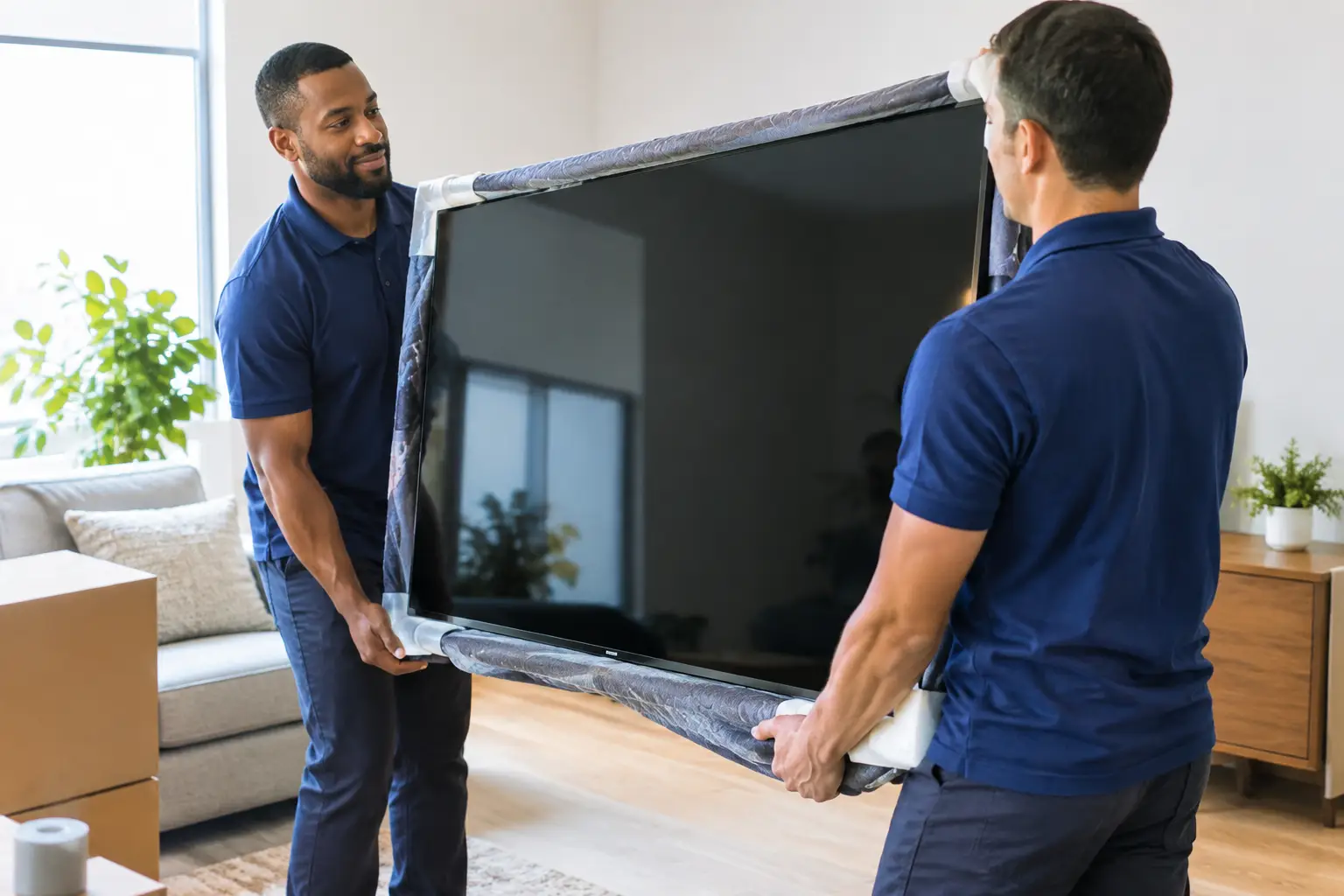
That large flat-screen in the living room may be one of the last things you want to think about on moving day. It is also one of the easiest items to damage with one rushed lift or an unsecured ride in the truck. So, can movers move televisions? Yes. Professional movers can move televisions when they are properly prepared, packed, loaded, and secured for the trip.
For Northwest Arkansas families, renters, and homeowners, the best approach depends on the TV’s size, value, condition, original packaging, and the distance of the move. A small bedroom TV calls for a different plan than a 75-inch screen mounted above a fireplace. The goal is the same either way: get it to your new home without cracked glass, screen pressure, loose accessories, or a preventable surprise when you unpack.
Can Movers Move Televisions Without Damage?
Movers routinely handle televisions, but no one should promise that an electronic item is risk-free. Modern TVs are thinner and lighter than older models, yet their screens can be fragile. Pressure on the display, a sharp impact, or a poorly secured load can cause damage that is not always obvious until the TV is turned on.
A careful moving crew treats the television as a specialty item. That usually means protecting the screen, keeping the unit upright whenever possible, using the right number of people for the lift, and securing it so it cannot shift during transport. A TV should never be laid loose in the back of a truck with boxes stacked on top of it.
The condition of the home matters, too. Narrow hallways, steep stairs, tight apartment turns, and icy or rainy weather can affect the handling plan. Share those details when requesting your estimate so the moving team can arrive ready for the job.
The Best Way to Prepare a TV for Movers
The hours before a move are not the time to untangle cords while the truck is in the driveway. Preparing your television ahead of time makes the move safer and helps your crew work efficiently.
First, unplug the TV and allow it to cool if it was recently in use. Remove any cables, streaming devices, soundbars, gaming consoles, antennas, and wall-mounted accessories. Put remotes, power cords, screws, and small connectors in labeled bags. Keep those bags with your personal essentials or clearly mark the box they belong in.
Take a few photos of the TV while it is connected, especially the back panel. Those pictures make reconnecting everything much easier in your new home. If you have a wall mount, photograph the mount and hardware as well.
If the TV is mounted, ask in advance whether your movers provide dismounting and remounting service. Moving companies may be able to remove a television from a mount, but wall work can have separate service terms. Remounting may also require checking wall studs, using the correct hardware, and confirming that the new location can support the television safely. Do not assume this is included without discussing it first.
Keep the Original Box if You Have It
The manufacturer’s box with its fitted foam inserts is often the best packaging option. If you saved it, use it. It was designed to support the television at its most vulnerable points during transportation.
Most households do not keep a TV box for years, and that is completely normal. In that case, a professional packing plan can include a TV carton sized for the screen, padded protection, corner guards, and secure wrapping. The screen needs protection from direct pressure, while the outer frame and corners need protection from bumps and vibration.
Avoid wrapping a screen directly in tape, plastic wrap, or adhesive materials. These can leave residue or create pressure against the display. Likewise, do not use a blanket alone as the entire packing solution for a large TV. Blankets help with cushioning, but they must be applied and secured in a way that keeps the screen protected.
How Professional Movers Transport TVs
After packing, the television should be carried upright and handled from the frame rather than squeezed through the screen. Larger TVs often require two trained movers. Trying to carry a big screen alone can lead to a dropped unit, damaged corners, or injury.
Inside the moving truck, the TV should be placed in a protected position where it will not tip, slide, or bear the weight of other household goods. It is usually secured alongside stable, padded items, never underneath furniture or heavy boxes. The crew should build the load around the TV rather than treating it like an afterthought.
For a local move from Bentonville to Rogers, Fayetteville, Bella Vista, or another nearby Northwest Arkansas community, the ride may be shorter, but safe loading still matters. Sudden stops, turns, rough pavement, and repeated unloading at a storage unit or apartment can all create risk. For long-distance moves, careful packing and secure placement become even more critical because the item spends more time in transit.
What Movers May Need to Know Before Moving Your Television
Clear communication helps prevent moving-day delays. When you request a quote, tell the company the approximate screen size, whether the TV is mounted, and whether you have the original box. Let them know about stairs, elevators, tight doorways, storage stops, and any particularly valuable electronics.
It is also wise to discuss coverage before the move. Licensed and insured movers provide an added layer of professionalism, but coverage options and liability terms vary by company and service agreement. Ask direct questions about how electronic items are covered, what documentation may be needed if damage occurs, and whether additional valuation protection is available for high-value belongings.
If your television is unusually expensive, custom-installed, curved, oversized, or part of a complete home theater system, mention that during the estimate. Some items may need specialty packing, a custom crate, or coordination with an electronics or AV installer. The right answer is not always “put it on the truck and go.” A good mover will explain the safest practical option.
Should You Move a Television Yourself?
You can move a smaller television yourself if you have proper protection, a suitable vehicle, and someone to help carry it. However, saving a little time or money is not always worth the risk. A large screen can be awkward to maneuver, and the cost of replacement can quickly outweigh the price of professional handling.
Self-moving is especially risky when the TV must travel in the bed of a pickup, ride flat in a packed SUV, or be carried down a staircase by one person. Temperature, rain, road vibration, and shifting cargo create problems fast. If you do move it yourself, keep it upright, protect the screen and corners, secure it firmly, and do not stack anything against it.
For many households, it makes more sense to let a trained crew handle the television along with the furniture, boxes, and heavy lifting. That gives you more time to manage address changes, utility transfers, kids, pets, closing paperwork, and the many other details that come with a move.
A Simple Plan for Moving Day
Before the crew arrives, disconnect the TV, pack the cords and remotes, and make sure there is a clear path from the room to the door. Tell the movers which television is going, whether it is working properly, and where you would like it placed at the new home. If it is still mounted, confirm the removal plan before moving day begins.
At Major Movers LLC, we believe neighbors deserve straight answers and careful service, not guesswork around the belongings they use every day. A television may be one item on a long moving checklist, but it deserves the same professional attention as your furniture, family keepsakes, and electronics.
If your move is coming up in Northwest Arkansas, bring up your TV during the estimate. A few details shared early can help your moving crew prepare the right protection, plan the right lift, and help you settle in with your screen ready for movie night in the new place.