
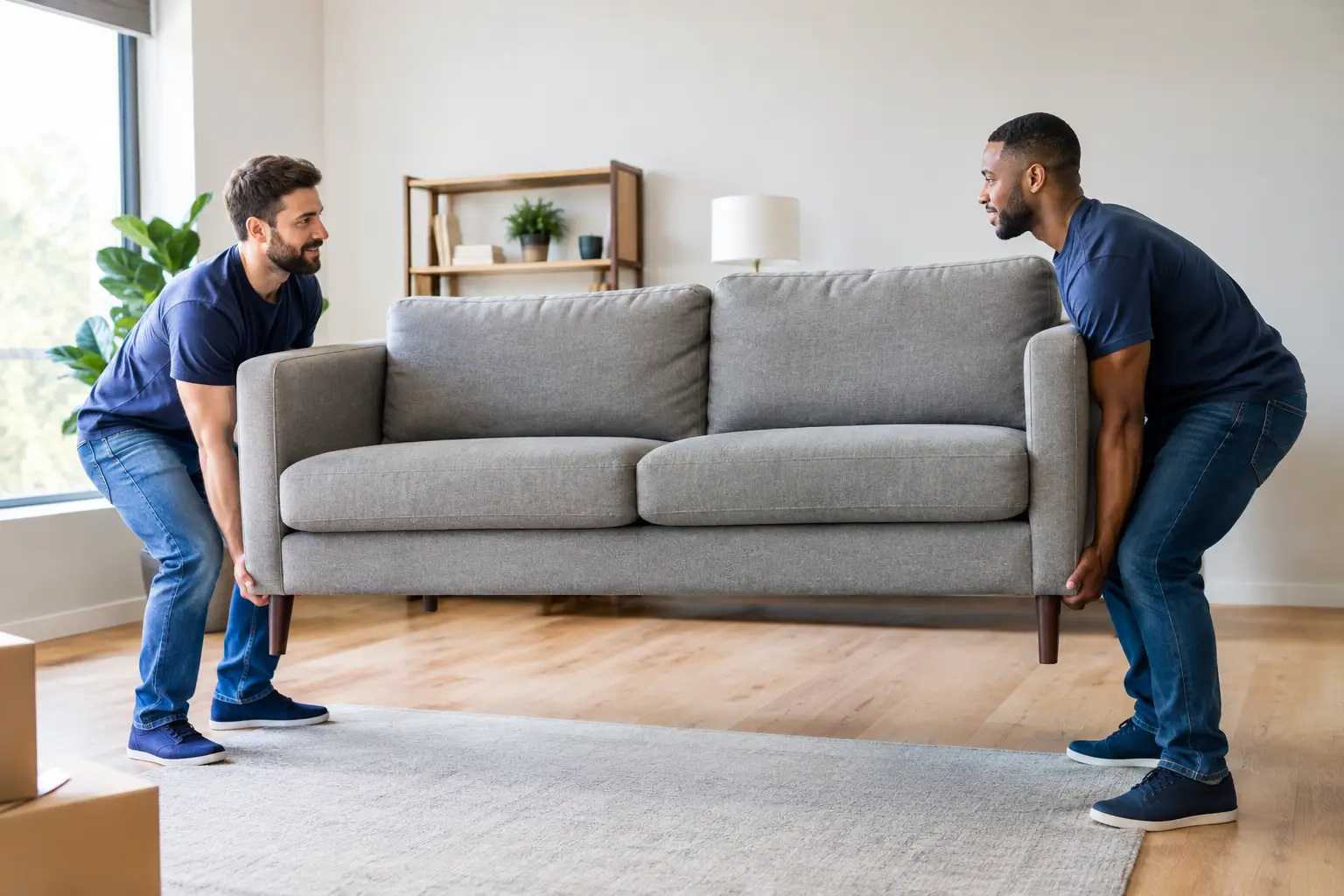
That solid wood dresser may look manageable until it catches on a doorway, shifts in your hands, or turns one wrong step into a strained back. To move heavy furniture safely, the goal is not to prove how much you can lift. It is to protect your home, your belongings, and the people helping you.
For Northwest Arkansas households, furniture moves often involve tight apartment hallways, porch steps, sloped driveways, and stairs in older homes. A little preparation makes a major difference. Some pieces can be handled with the right equipment and a dependable helper. Others are better left to licensed, insured professionals who move heavy items every day.
Start With a Plan Before You Lift
Heavy furniture should never be the first thing you grab on moving day. Measure the piece, then measure every part of the path it must travel: doorways, halls, stair landings, elevators, gates, and the moving truck opening. Do not assume a couch will fit because it made it into the house years ago. It may have arrived before flooring, trim, railings, or a new doorway changed the available space.
Clear the route completely. Pick up rugs, shoes, cords, toys, boxes, and anything else that can become a trip hazard. Open doors fully and secure them if needed. If rain is in the forecast, plan for wet steps and slick surfaces rather than hoping conditions improve at the last minute.
It also helps to decide where the furniture will go before it enters the new home. Moving a heavy sectional across a room twice is tiring and unnecessary. Place painter's tape on the floor if you need a quick visual guide for the final layout.
Empty, Protect, and Break Down What You Can
A furniture piece is usually heavier than it needs to be. Empty every drawer, cabinet, shelf, and hidden compartment before moving it. Books, dishes, files, and small items add surprising weight, and loose contents can shift while you carry the piece.
Remove detachable legs, shelves, mirrors, cushions, and hardware when possible. Keep screws and brackets in a labeled bag taped securely to the furniture or stored with your moving essentials. For items such as bed frames, dining tables, and large desks, disassembly can turn an awkward lift into several manageable pieces.
Wrap corners and finished surfaces with moving blankets, furniture pads, or stretch wrap. Blankets protect the furniture from scuffs, but they also protect walls, door frames, and floors from the sharp edge of a dresser or table. Tape padding to itself, not directly to wood, upholstery, or painted finishes.
Use Equipment Instead of Muscle
The right moving tools reduce risk because they let you roll, slide, or leverage an item rather than carry its full weight. Furniture sliders work well on carpet, hardwood, laminate, and tile when matched to the floor type. A hand truck or appliance dolly is useful for tall, heavy items that can be strapped upright. Furniture dollies can help with wide, flat pieces, although they require a level route and careful control.
Moving straps can redistribute weight and make a bulky item easier for two people to carry. They are not magic, though. Straps require practice, clear communication, and enough clearance around the item. They are a poor choice on narrow staircases or when one person is much shorter or less mobile than the other.
For stair moves, a proper appliance dolly with secure straps is often safer than trying to carry an item by hand. Still, stairs create a different level of risk. The person below the item may be carrying most of the load, and one missed step can cause serious injury or property damage.
Lift the Right Way When Carrying Is Necessary
When you do need to carry a heavy piece, get close to it. Bend at your knees and hips, keep your back neutral, tighten your core, and lift with your legs. Hold the item close to your body rather than extending your arms. The farther the weight is from your center, the more strain it places on your back and shoulders.
Never twist while holding furniture. If you need to change direction, move your feet and turn your entire body. Keep your grip dry, wear closed-toe shoes with traction, and use work gloves if they improve your hold without making you clumsy.
Most importantly, communicate before every movement. One person should call the directions: lift, lower, stop, turn, and set down. Avoid vague instructions such as “watch it” when a clearer call like “stop, the leg is catching the door frame” will prevent confusion.
Know When a Piece Needs More Than Two People
Not every heavy item is a two-person job. Large armoires, solid wood china cabinets, oversized recliners, sleeper sofas, pianos, safes, adjustable bed bases, and commercial-grade appliances can be difficult because of their weight, shape, balance, or fragile components.
A piece may also be too risky to handle yourself when the route includes several flights of stairs, a steep driveway, tight corners, or delicate flooring. A few extra friends do not always solve the problem. More people in a narrow hallway can make coordination harder and increase the chance of someone losing their footing.
This is where professional moving help earns its value. Experienced movers bring trained crews, furniture pads, dollies, straps, and a process for protecting both the item and the property. They can also assess the route before the lift begins rather than discovering the problem halfway down a staircase.
Protect Your Home During a Heavy Furniture Move
Damage often happens at transition points: a tight doorway, a sharp turn, a stair rail, or the moment furniture is set down. Use floor protection where needed, especially on hardwood, vinyl, and light-colored carpet. Cover railings and door frames if a large item will pass closely by them.
Take extra care with glass, mirrors, and marble tops. These items may not be the heaviest in the room, but they can be among the most expensive to replace. Glass should be wrapped, clearly marked, and carried upright when appropriate. Marble and stone pieces can crack under their own weight if lifted from the wrong point.
If you are loading a truck, place heavy furniture against the front wall and distribute weight evenly from side to side. Secure each piece with moving straps or tie-downs so it cannot shift during turns or sudden stops. Do not stack boxes on upholstered furniture or place a heavy item against a fragile wood finish without padding between them.
A Practical Decision: DIY or Professional Movers?
A do-it-yourself furniture move can make sense when the item is reasonably sized, the path is flat and clear, you have proper equipment, and you have capable help. It can also be a good option for rearranging one room or moving a small piece across the house.
Hiring movers is usually the better decision when injury, damage, or time pressure would cost more than the service. That is especially true for full household moves, apartment stairs, large specialty pieces, and long-distance relocations. Professional support gives you a crew that arrives ready to work instead of asking family members to take on a job they may not be equipped to handle.
Major Movers LLC serves neighbors throughout Bentonville, Rogers, Springdale, Fayetteville, Bella Vista, Lowell, Pea Ridge, Siloam Springs, and surrounding Northwest Arkansas communities with dependable, full-service moving support. As a Christian family-owned company, the focus is simple: treat your home and belongings with the care neighbors deserve.
When a piece feels too heavy, too awkward, or too risky, listen to that instinct. A careful plan and the right help can turn a stressful furniture move into a safe start in your next space.