
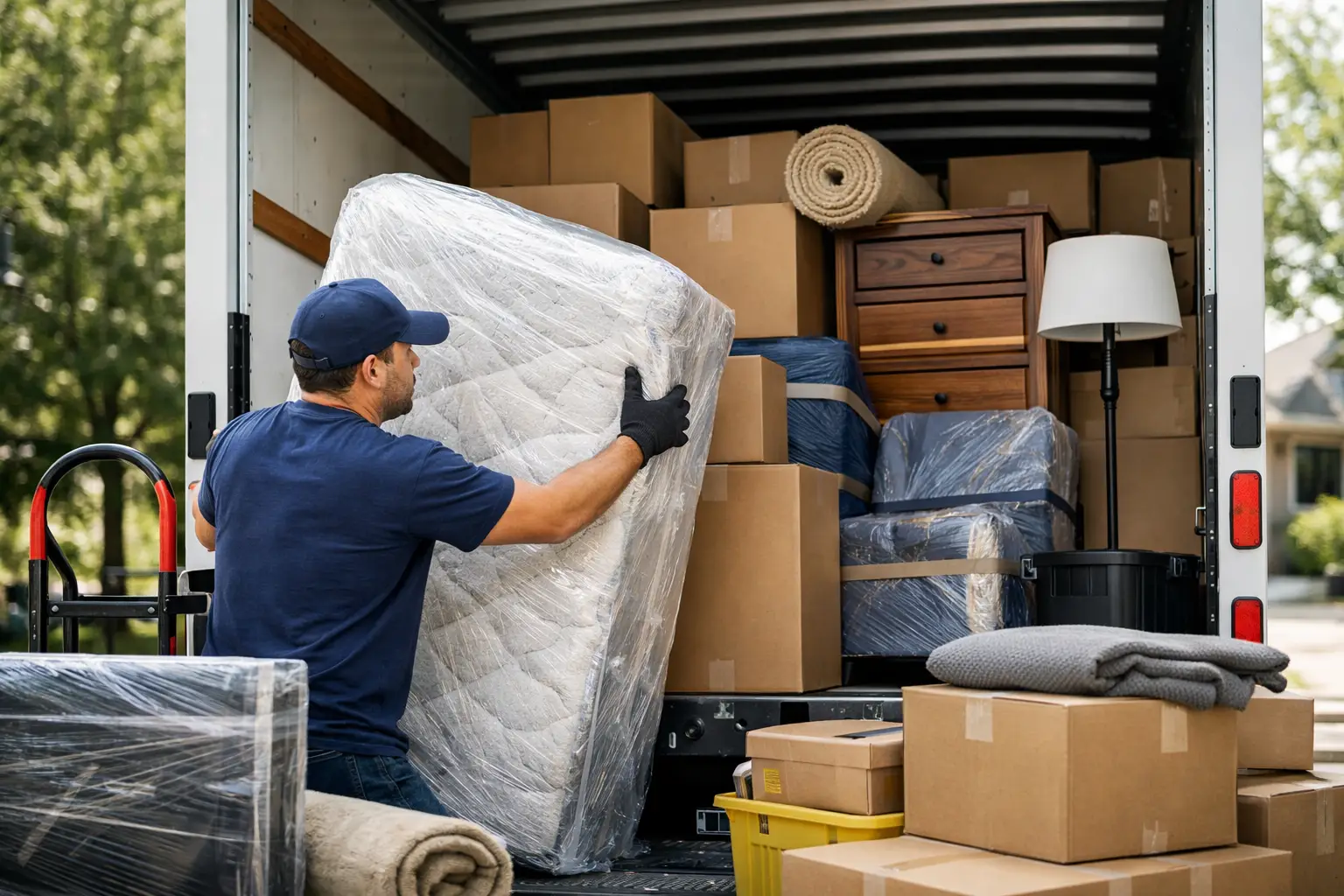
A moving truck can look roomy when it is empty. Then the couch, mattress, boxes, tools, and that one oversized chair start piling up in the driveway. Knowing how to pack a moving truck in the right order protects your belongings, uses your rental space wisely, and makes unloading much less stressful.
The goal is not to fill every open inch as fast as possible. The goal is to build a stable load that will not shift when the truck stops, turns, or travels over uneven roads. Whether you are moving across Bentonville or heading out of Northwest Arkansas, a little planning can prevent broken furniture, crushed boxes, and a difficult moving day.
Start Before the Truck Arrives
Packing a truck begins inside the home, not at the loading ramp. Have boxes sealed, labeled, and stacked by room before moving day. Loose items are difficult to secure and take up more space than you expect. If something can fit safely in a box, tote, drawer, or bag, pack it before loading begins.
Choose the truck size carefully. A truck that is too small may require a second trip or force you to stack belongings unsafely. A truck that is much too large can leave extra room for furniture and boxes to slide around. If you are unsure, it is better to discuss the size of your home and major furniture pieces with a moving professional before reserving the truck.
Gather the materials that protect the load: moving blankets, stretch wrap, mattress bags, tie-down straps, a hand truck, and a few pieces of cardboard. These are not extras for a careful move. They help keep wood surfaces from rubbing together, hold tall items in place, and reduce the risk of damage during transportation.
Pack the Moving Truck in Layers
A truck should be loaded from the front wall toward the rear door. Start with the heaviest, tallest, and most durable belongings. These pieces create the foundation for everything that follows.
Load Appliances and Heavy Furniture First
Place large appliances, dressers, bookcases, sectionals, and other heavy furniture against the front wall of the truck, also called the bulkhead. Keep the weight low and distributed from side to side. Loading all your heavy pieces on one side can affect how the truck handles on the road.
Stand sofas upright when doing so safely saves room, but protect the corners with moving blankets. Mattresses and box springs can stand along the truck walls, where they create a cushioned barrier around furniture. Do not place heavy items on top of a mattress or allow it to bend under pressure.
Dressers can sometimes travel with lightweight items inside, such as linens or soft clothing, but remove anything fragile, valuable, or loose. Drawers can open during transport if they are not secured. Wrap the dresser and use stretch wrap around the body of the furniture if needed.
Build a Tight Wall, Then Strap It Down
Once the first section is in place, use tie-down straps to secure it to the truck's anchor rails. Do not wait until the truck is completely loaded. Strapping each major section as you go keeps the load from shifting while you carry more items inside.
Fill gaps beside furniture with sturdy boxes, rolled rugs, or soft goods. Empty space is the enemy of a safe truck load. That does not mean forcing items into tight spots. It means using the right-sized belongings to keep larger pieces from moving.
A good load often looks like a series of compact walls. Each wall is stacked, padded, and secured before you begin the next one. This approach takes a few more minutes, but it is far safer than loading furniture at random and hoping it stays put.
Put Heavy Boxes Low and Fragile Boxes High
Boxes should be loaded by weight, not just by the room written on the label. Put books, dishes, tools, and other heavy boxes on the floor. Stack lighter boxes on top. Keep the stacks even and avoid building towers that lean or rise above a stable height.
Boxes marked fragile should not be squeezed between heavy furniture or buried underneath household goods. Place them in a protected area on top of a stable stack, then use blankets or soft items to prevent movement. Artwork, mirrors, televisions, and glass tabletops need special attention. They should be wrapped, kept upright, and secured so they cannot tip over.
If you have an item that cannot be replaced, such as important documents, jewelry, medications, family photos, or a laptop, carry it with you rather than loading it into the truck. The same goes for cleaning chemicals, propane tanks, gasoline, fireworks, and other items that may not be safe or permitted in a moving truck.
Use Soft Items as Protection
Blankets, towels, pillows, comforters, and sofa cushions can do more than fill boxes. They are useful padding between furniture pieces and around awkward gaps. A wrapped dining table, for example, is less likely to get scraped by a box or metal bed frame during a sudden stop.
Still, soft items should not replace proper moving blankets for heavy wood furniture, glass, or appliances. Towels can bunch up and shift. Moving blankets provide broader coverage and are easier to secure with stretch wrap or straps.
Rugs also work well as a protective layer. Roll them tightly and place them along the side of the truck, under furniture, or in gaps between large items. Just make sure they are dry and clean before loading. Moisture trapped inside a packed truck can create a problem you do not want to discover at the new house.
Save the Essentials for Last
The final items in the truck should be the things you will need soon after arrival. These may include a small tool kit, bedding, basic cleaning supplies, toilet paper, chargers, pet supplies, and a clearly marked first-night box. Keep these close to the rear door so they are easy to unload.
This is especially helpful after a long move to Rogers, Fayetteville, Springdale, or another nearby community. When you are tired and surrounded by stacks of boxes, you do not want to search through the entire truck for sheets, a phone charger, or the hardware for your bed.
Before closing the door, walk through the truck one last time. Check for open gaps, unstable stacks, exposed corners, and items that could roll. Add straps where needed. Give furniture a gentle push. If it moves easily while the truck is parked, it can move much more on the road.
Know When Professional Help Makes Sense
A DIY truck move can work well for a small apartment, a short local move, or a household with limited furniture. But stairs, heavy appliances, antiques, oversized sectionals, and long-distance travel add real risk. The cost of a damaged item, an injured back, or an extra day of moving can quickly outweigh the savings.
For neighbors who want experienced help with loading, transport, and unloading, Major Movers LLC provides licensed and insured moving support across Northwest Arkansas. A professional crew knows how to protect furniture, balance a truck, navigate tight driveways, and keep a moving day on schedule.
A well-packed truck gives you more than a cleaner load. It gives you confidence when the door rolls down and the road ahead is full of enough change already. Take the time to load with care, or request a quote from a trusted local team and let’s get moving.