
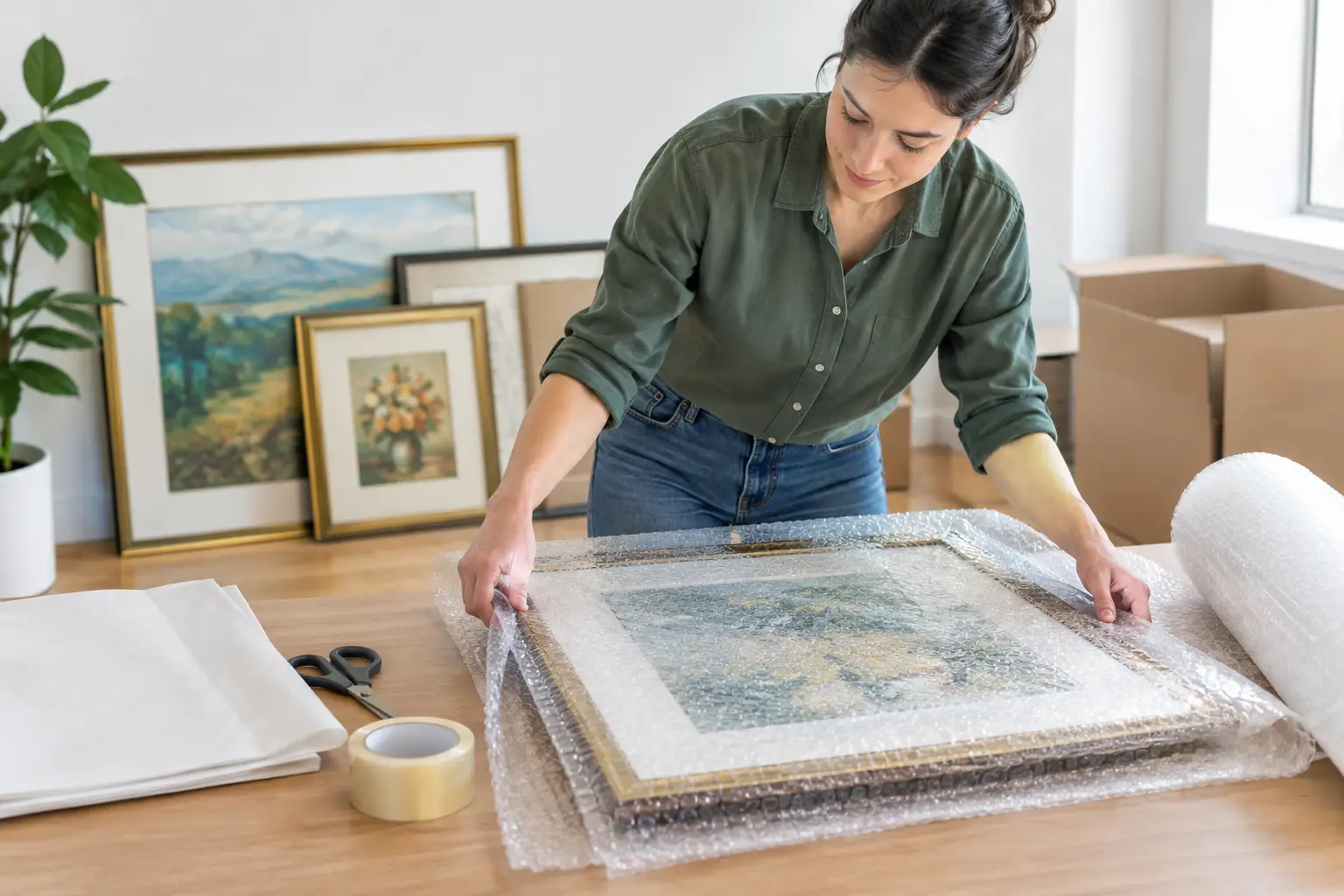
A favorite canvas, a gallery wall of family photos, or a framed print from a meaningful trip can be some of the most personal items in your home. Knowing how to pack artwork for moving helps prevent cracked glass, dented frames, torn canvases, and the stress of opening a box to find something irreplaceable damaged.
Artwork needs more than a blanket wrapped around it and a spot in the moving truck. The right materials, a little preparation, and careful loading make a real difference, especially during a busy move in Northwest Arkansas.
Start With the Right Packing Materials
Do not wait until moving day to gather supplies. Artwork is more likely to get damaged when it is packed with leftover boxes, thin tape, or whatever padding happens to be nearby. Set aside clean, dry materials made for protecting fragile items.
For most framed art and canvases, you will want:
- Clean packing paper or acid-free tissue paper
- Bubble wrap with medium or large bubbles
- Painter's tape or packing tape
- Cardboard corner protectors
- Flat picture boxes or sturdy cardboard sheets
- Moving blankets or furniture pads
Avoid placing tape directly on painted surfaces, wood frames, or glass. It can leave residue, pull away finish, or damage delicate details. Painter's tape is helpful for protecting glass, but it should only touch the glass itself.
Before packing, take a quick photo of each piece. This gives you a record of its condition and makes it easier to decide where every item belongs when you unpack. For a large collection, label the photos or make a simple room-by-room list.
How to Pack Artwork for Moving, Step by Step
The packing method depends on whether the piece has glass, a canvas surface, or loose paper. Do not treat every picture the same. A framed print with glass needs protection against shattering, while a stretched canvas needs protection from punctures and pressure.
Protect framed art with glass
Start by wiping dust from the frame and glass with a soft, dry cloth. Lay the piece face-up on a clean, flat surface. Make a large X across the glass with painter's tape, then add a horizontal strip through the middle if the frame is especially large. This tape does not prevent the glass from breaking, but it can help hold broken pieces together if an impact occurs.
Place a sheet of packing paper or tissue over the front of the frame. Add cardboard corner protectors, then wrap the entire piece in bubble wrap. Keep the bubbles facing outward when possible so they do not press directly against the glass. Secure the wrap with tape around the package, never across the face of the artwork.
For extra protection, slide the wrapped frame into a picture box. If you do not have a picture box, sandwich the frame between two clean cardboard sheets that extend beyond every edge. Tape the cardboard together securely, but do not tape it to the frame.
Pack canvases without crushing them
A canvas has no glass to shatter, but its surface can tear or stretch if another item presses against it. Cover the face of the canvas with a clean sheet of packing paper, then wrap it loosely in bubble wrap. Do not pull the wrap tight enough to create pressure on the painted surface.
Corner protectors are especially useful for canvases because the edges are easy to chip or dent. For larger canvases, use two pieces of cardboard on the front and back before wrapping. This creates a protective barrier during loading and unloading.
If the canvas is oversized, antique, or highly valuable, consider professional packing. The cost of specialty packing may be worth it when replacement is not realistic.
Handle unframed prints and paper art carefully
Posters, watercolors, sketches, and photographs should stay flat whenever possible. Place each piece between acid-free tissue paper or clean packing paper, then add rigid cardboard on both sides. Store the stack in a flat box that is slightly larger than the art.
Do not roll older paper artwork unless a conservator has confirmed it is safe. Paper can crease, crack, or retain a curl that is difficult to remove. Keep these boxes dry and away from heavy furniture or appliances.
Keep Boxes Upright and Clearly Labeled
The way artwork is loaded matters just as much as the wrapping. Framed pieces should travel upright, like records on a shelf, rather than flat under a stack of boxes. When artwork lies flat, weight can press on the glass or frame. When it stands upright with proper support, it is less likely to flex or take direct pressure.
Use a sturdy box that fits closely enough to limit movement, but do not force the artwork into a box that is too small. Fill any open space with crumpled packing paper or soft padding. The piece should not slide when you gently move the box.
Label every box on multiple sides with “FRAGILE,” “ARTWORK,” and “THIS SIDE UP.” Add the room name or a short description, such as “living room family photos.” Clear labels help everyone handling the move understand that the box cannot be stacked under heavier items.
For framed pieces that are too large for boxes, wrap them in moving blankets and secure the blankets with stretch wrap or tape around the blanket only. Keep the artwork upright against the interior wall of the truck, with mattresses, padded furniture, or other soft barriers nearby for support. Never place a large framed piece where it can shift freely during transit.
Watch for Heat, Moisture, and Temperature Changes
Artwork can be damaged by more than bumps and drops. High humidity may warp paper or loosen adhesives, while extreme heat can affect paint, varnish, and older frames. Northwest Arkansas weather can change quickly, so avoid leaving art in a garage, porch, or moving truck longer than necessary.
If you are moving during rain, use waterproof plastic only as an outer layer for short-term protection. Do not seal artwork in plastic for days or weeks, especially if there is any moisture inside the wrap. Trapped humidity can lead to mildew or surface damage.
For original paintings, antiques, signed pieces, or family heirlooms, transport them in a climate-controlled personal vehicle when possible. This is also a smart choice for artwork with sentimental value that you would rather keep close during the move.
Know When to Ask for Professional Help
Most standard frames and decorative canvases can be packed safely with time and the right materials. However, there are situations where professional support is the better call. Large mirrors, oversized framed art, delicate sculptures, expensive originals, and pieces with existing damage all need extra attention.
A licensed and insured moving team can help with careful loading, unloading, and placement, reducing the risk that artwork gets squeezed between heavy household items. As a Christian family-owned company serving neighbors across Bentonville, Rogers, Springdale, Fayetteville, Bella Vista, Lowell, Pea Ridge, and Siloam Springs, Major Movers LLC understands that the belongings in a home are more than boxes to move.
If you are unsure whether a piece needs specialty packing, err on the side of protection. It is easier to add one more layer of cardboard or padding than to repair a cracked frame or damaged canvas after the truck is unloaded.
When you arrive, unpack artwork after the largest furniture is in place and the pathways are clear. Give each piece a safe temporary spot, check it in good light, and take your time deciding where it belongs. A careful start at the old home helps your favorite artwork look just as good on the new walls.