
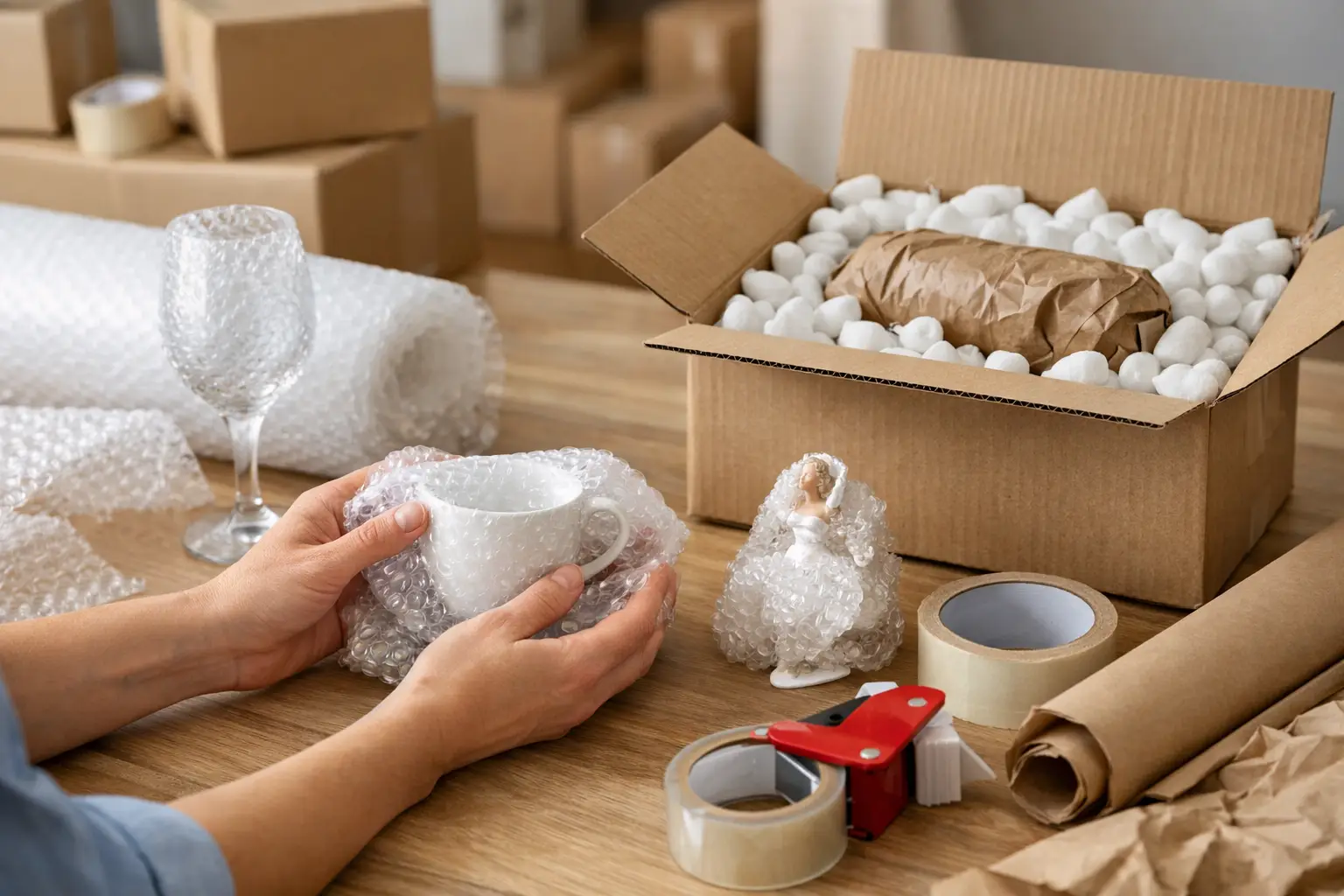
A box can look full and still be one sharp turn away from disaster. The trouble usually is not the truck ride. It is the empty space inside the carton, the wrong box under too much weight, or a glass bowl packed with nothing separating it from the next one. Knowing how to pack fragile items gives your belongings a real chance of arriving in one piece.
For Northwest Arkansas households preparing for a move, start early with the items you use least. Holiday serving dishes, framed art, extra glassware, and decorative pieces can be packed well before moving day. That leaves fewer rushed decisions when the kitchen and living room need to come together.
Start With the Right Packing Materials
Fragile packing works when each item has its own protection, the box can support the load, and there is no room for items to shift. Reused boxes can work for lightweight belongings if they are clean, dry, and structurally sound. For dishes, glassware, electronics, and anything with real weight, use sturdy moving boxes with solid corners and intact bottoms.
Gather your materials before you begin. You will need packing paper, bubble wrap, strong packing tape, permanent markers, and boxes in several sizes. Cardboard dividers help with stemware, while small boxes or specialty cartons are useful for lamps, artwork, and electronics. Towels, blankets, and clean socks can provide extra cushioning in a pinch, but they should support good packing materials, not replace them.
Use small boxes for heavy fragile items. A large box packed with plates may hold together, but it can become too heavy to lift safely. Medium boxes are usually best for cookware, serving pieces, and most dishes. Larger boxes are better suited for lightweight but awkward belongings, such as pillows wrapped around a lamp base.
How to Pack Fragile Items One Layer at a Time
Think of every box as a protected container within a protected container. Tape the bottom seam of each box, then run two additional strips of tape across it. Add a two- to three-inch cushion of crumpled packing paper to the bottom before placing anything inside.
Wrap each item individually. Lay a glass, plate, or decorative piece on packing paper and fold the paper around it from several directions. Secure the bundle with tape if needed, especially for pieces with loose lids or handles. Bubble wrap is best reserved for highly delicate, unusually shaped, or valuable items. It adds protection, but using it on every dish can make packing slower and boxes bulkier.
Place the heaviest wrapped pieces on the bottom and lighter pieces on top. Keep similar items together when possible. A box of all plates is easier to pack securely than a random mix of mugs, candles, and picture frames.
After each layer, fill gaps with crumpled paper. Do not rely on a few loose sheets at the top. Gaps along the sides and between items are where breakage starts. When the box is full, add a final layer of cushioning, close the lid, and gently move the box from side to side. If you feel or hear movement, open it and add more fill.
Pack Plates, Glassware, and Mugs Differently
Kitchen items account for a large share of moving-day breakage because they are dense, repetitive, and easy to rush. A better approach changes slightly for each item.
Plates should be wrapped one at a time and packed vertically, like records in a crate, rather than stacked flat. Vertical packing spreads pressure more evenly and reduces the chance that the bottom plate takes the full weight of the stack. Put a layer of cardboard or several sheets of paper between every few plates for added support.
For glasses, stuff the interior with packing paper first. This helps prevent the bowl from collapsing if the box is bumped. Wrap the glass from the rim down, paying extra attention to the stem and base. Pack glasses upright in a box with dividers when available. If you do not have dividers, create firm paper barriers between each glass and avoid overfilling the box.
Mugs need paper inside the cup and extra protection around the handle. Place them upright and do not allow handles to touch. Bowls can be nested only when each bowl is separated by packing paper or thin foam. Never place bare glass directly against bare glass.
Protect Pictures, Mirrors, and Wall Decor
Frames and mirrors need protection at the corners first. Use cardboard corner guards or folded pieces of sturdy cardboard, then wrap the whole item in bubble wrap or a moving blanket. Tape the padding to itself, not directly to the frame, where adhesive can damage finishes.
For larger framed art and mirrors, make an X across the glass with painter's tape. The tape will not stop a break, but it can help hold shards together if the glass is damaged. Mark the package clearly as “FRAGILE” and “THIS SIDE UP.” Load frames vertically, never flat under heavy boxes.
A mirror or large artwork may need a specialty box, especially for a long-distance move. This is one of those cases where using the right carton is worth the added cost. An oversized box filled with loose paper will not protect a heavy glass panel as well as a fitted, reinforced option.
Take Extra Care With Electronics and Lamps
Original manufacturer boxes are ideal for televisions, monitors, computers, and small appliances because they are designed around the item’s shape. If you no longer have them, use a sturdy box that leaves enough room for cushioning on all sides. Remove cords, remotes, and detachable parts, then place them in labeled bags inside the same box.
Screens should be covered with a soft, clean cloth before bubble wrap is applied. Do not place tape directly on a screen. For TVs and monitors, keep the unit upright during transport. Laying a screen flat can create pressure points that lead to damage.
For lamps, remove the bulb, shade, and harp. Wrap the base separately, and pack lampshades in their own box with clean packing paper. Shades crush easily, so do not use their box as a place to fill extra space with heavy items.
Label for the Person Carrying the Box
“Fragile” is helpful, but it is not enough. Write the room, a short description of the contents, and handling instructions on at least two sides of every box. For example: “Kitchen - Glassware - Fragile - Keep Upright.” That gives you, your family, or your moving crew the information needed to load it correctly.
Avoid vague labels such as “miscellaneous.” A clear label makes unloading faster and prevents a box of wine glasses from being set in the garage beside tools or stacked under heavier cartons. If a box contains a particularly valuable item, note that it requires careful handling without advertising the exact value on the outside.
Common Packing Mistakes to Avoid
Breakage often comes down to a few preventable shortcuts:
- Overloading boxes until they are difficult to lift or the bottom begins to bow.
- Leaving open space between wrapped items and assuming the lid will hold everything in place.
- Packing heavy items above lighter, more delicate belongings.
- Using newspaper directly on surfaces that can stain, such as fine china or light-colored decor.
- Marking a box fragile but failing to protect the item inside with enough padding.
There is also a difference between packing something carefully and packing it for the distance it will travel. A quick local move from Rogers to Bentonville may require less reinforcement than a longer relocation, but fragile items still need a secure box, individual wrapping, and no movement inside. Arkansas roads, stairs, driveways, and loading transitions can create plenty of opportunities for a poorly packed box to shift.
Know When to Ask for Help
Some belongings are simply not good candidates for a DIY packing experiment. Large mirrors, antiques, chandeliers, marble pieces, heirloom china, and oversized artwork may need specialty materials and experienced handling. If the item cannot be replaced, or replacing it would be expensive or deeply personal, professional packing support is a practical choice.
Major Movers LLC serves neighbors across Northwest Arkansas with licensed, insured, professional moving support. A free estimate can help you decide whether you need help with the full move, the heavy lifting, or only the items that deserve extra care.
Give yourself enough time to pack fragile belongings slowly, one box at a time. A well-wrapped dish or carefully cushioned frame takes a few extra minutes now, but it is a much better use of your moving day than opening a box of broken pieces later. Lets get moving!