
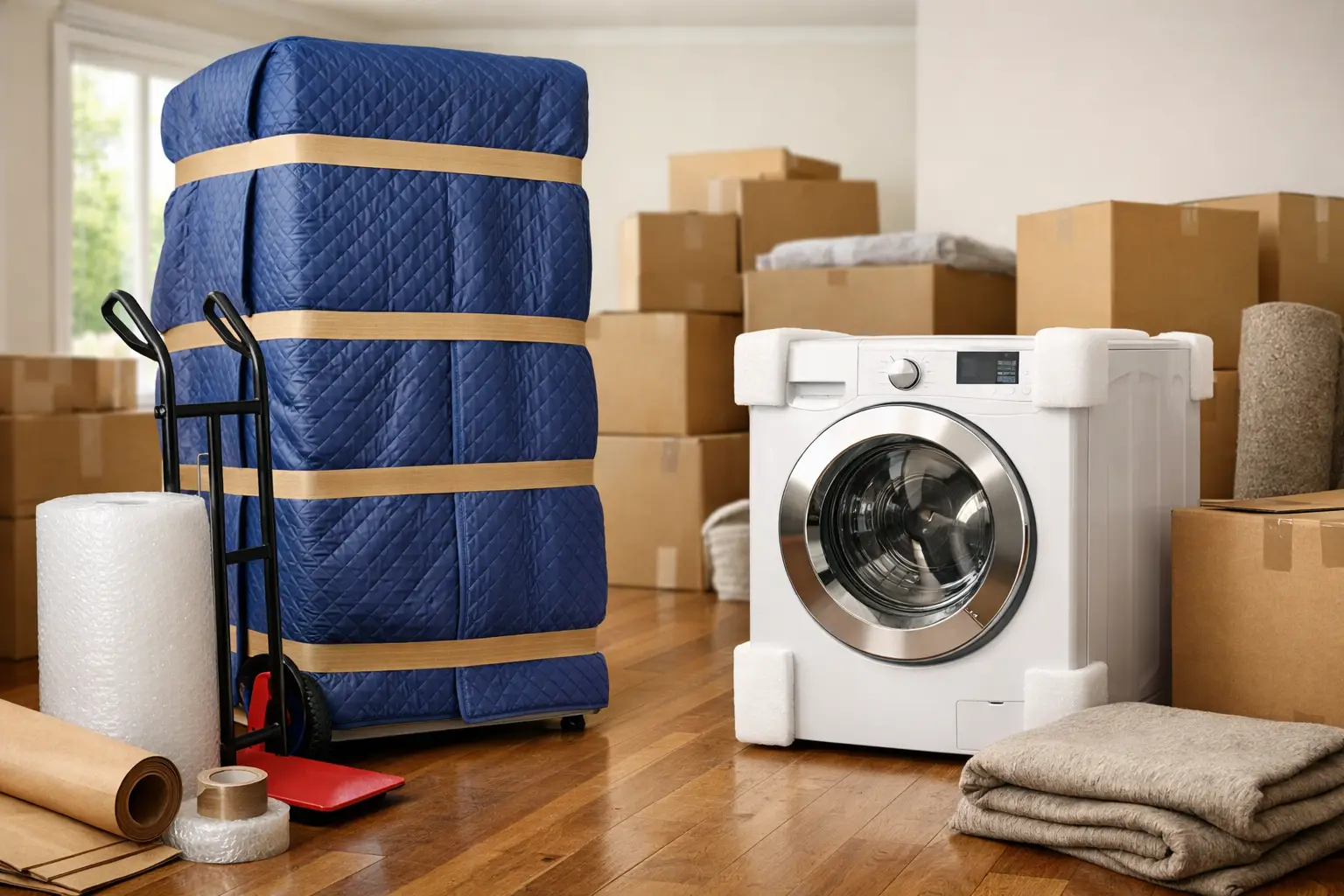
A refrigerator that was not defrosted can leave a trail of water through your home and the moving truck. A washer with loose internal parts can be damaged before it reaches the new laundry room. Knowing how to prepare appliances for moving helps prevent those stressful, expensive surprises.
Appliances are heavy, awkward, and connected to water, gas, electricity, or ventilation. Give them attention several days before moving day, not during the final rush of loading boxes. The exact preparation depends on the appliance, but the goal stays the same: disconnect it safely, remove moisture, secure loose parts, and make sure your moving crew has a clear path.
Start Appliance Prep Several Days Before the Move
Do not wait until moving morning to unplug the refrigerator or empty the washing machine. Some appliances need time to dry out, cool down, or be professionally disconnected. Start by deciding which appliances are coming with you and which are staying with the home or apartment.
Check the owner’s manuals if you still have them. They may include model-specific instructions, especially for ice makers, front-load washers, gas ranges, and built-in units. Take a few photos of the hookups before disconnecting anything. Those photos can make installation at the new home much easier.
Before moving day, gather towels, a bucket, packing tape, zip ties, appliance dollies, and the original hardware or manuals if available. Keep cords, shelves, hoses, and small parts with the appliance whenever possible. A labeled bag taped securely to the side is often better than tossing pieces into a random moving box.
How to Prepare Appliances for Moving Room by Room
Refrigerator and freezer
A refrigerator needs the earliest start. Empty all food, including freezer items, at least a day or two before the move. Use up what you can, donate unopened nonperishables, and place refrigerated food in coolers if needed.
Unplug the unit 24 to 48 hours before loading so it can fully defrost. Put towels around the base and leave the doors open after the ice has melted. Wipe down all shelves, drawers, and interior surfaces. A clean, dry refrigerator is far less likely to develop mildew or odors during the move.
If your refrigerator has an ice maker or water dispenser, turn off the water supply and disconnect the line carefully. Let any remaining water drain into a bucket. Remove glass shelves and drawers if they are loose, then wrap and pack them separately. Secure the doors with moving straps or tape designed for appliances. Do not use tape directly on finished surfaces if it could leave residue.
At the new home, let the refrigerator stand upright for several hours before plugging it in. If it had to be tilted during transport, waiting gives the compressor oil time to settle.
Washing machine
Run one final empty cycle if needed, then unplug the washer and turn off both water valves. Disconnect the hot and cold supply hoses and let them drain fully into a bucket. Remove the drain hose only after you have towels ready, since water often remains inside.
Front-load and many top-load washers require shipping bolts to stabilize the drum. If you saved the original bolts, reinstall them according to the manufacturer’s instructions. If you no longer have them, contact the manufacturer or an appliance service provider before moving. Transporting a washer without proper drum support can cause serious internal damage.
Dry the inside of the drum, detergent drawer, and door seal. Leave the door open for a short time before the move so moisture can evaporate. Then secure hoses, cords, and loose accessories against the machine so they do not drag or get caught during loading.
Dryer
Unplug an electric dryer and disconnect the vent hose. Clean lint from the vent connection and the area behind the machine. This is a good opportunity to remove built-up lint that can become a fire risk.
A gas dryer should be disconnected by a qualified professional. Do not attempt to disconnect, cap, reconnect, or test a gas line yourself unless you are trained and authorized to do so. Once the dryer is safely disconnected, secure the vent hose and power cord to the unit.
Dishwasher
Empty the dishwasher, remove the racks if they slide out easily, and run a short rinse cycle a day before the move. Turn off the water supply, unplug the unit or switch off power at the breaker, and disconnect the water line and drain hose. Keep towels close because residual water is normal.
Built-in dishwashers require more planning than portable models. The mounting brackets, plumbing, and electrical connection may need professional attention. If you are unsure whether the appliance can be removed without affecting cabinets, flooring, or plumbing, schedule help before moving day.
Range, oven, and microwave
Electric ranges should be unplugged only after the power is shut off as needed. Remove oven racks, burner grates, and other loose parts, then pack them separately or secure them inside. Clean grease from the cooktop and oven so it does not transfer to other belongings.
Gas ranges need professional disconnection. A qualified technician can shut off the gas, disconnect the line, and confirm that it is safely capped. This is not a place to take chances to save a few minutes.
For countertop microwaves, remove the glass turntable and pack it separately. Over-the-range and built-in microwaves often need two people and the right tools to remove safely. Plan ahead rather than asking movers to handle a last-minute installation issue.
Protect Floors, Doors, and the Appliances Themselves
An appliance can be fully disconnected and still get damaged if it is moved the wrong way. Measure the appliance and compare it with doorways, stairwells, hallways, and elevator openings at both homes. In Northwest Arkansas, older homes, tight apartment entries, and sloped driveways can add difficulty quickly.
Keep appliances upright whenever their design requires it, particularly refrigerators and freezers. Use an appliance dolly, moving blankets, and straps rated for the weight of the item. Never rely on furniture pads alone to hold an appliance in place inside a truck.
Clear the route before the crew arrives. Remove rugs, shoes, planters, and small furniture from walkways. Protect hardwood, tile, and entry thresholds with appropriate floor coverings. A clean path helps protect your home and allows the movers to work efficiently.
Know When Professional Help Is the Safer Choice
Some appliance tasks are straightforward, while others should be handled by a qualified technician. Gas connections, hardwired appliances, built-in units, and complicated water lines deserve professional attention. If an appliance is still under warranty, improper moving or installation may also affect coverage.
Be upfront with your movers about what is being moved, where it is located, and whether it has been disconnected. Let them know about stairs, narrow turns, heavy appliances, or difficult driveway access before move day. Good information helps a moving team bring the right equipment and plan the safest approach.
For local and long-distance moves, Major Movers LLC can help Northwest Arkansas neighbors handle the heavy lifting with a licensed, insured, professional crew. Your preparation still matters, but you do not have to carry a refrigerator down a porch step by yourself.
A Final Check Before the Truck Arrives
Walk through each room and look behind every appliance. Confirm that water valves are off, gas work has been completed by a professional, cords are secured, and no hoses or loose shelves have been left behind. Check for water on the floor and dry it before anyone begins moving.
Then keep appliance manuals, shipping bolts, keys, and any installation hardware together in a clearly labeled box that travels with you. A little preparation gives you a cleaner move-out, safer loading, and a much better start when it is time to settle into your new home. When you are ready to plan the heavy lifting, request a free estimate and lets get moving!