
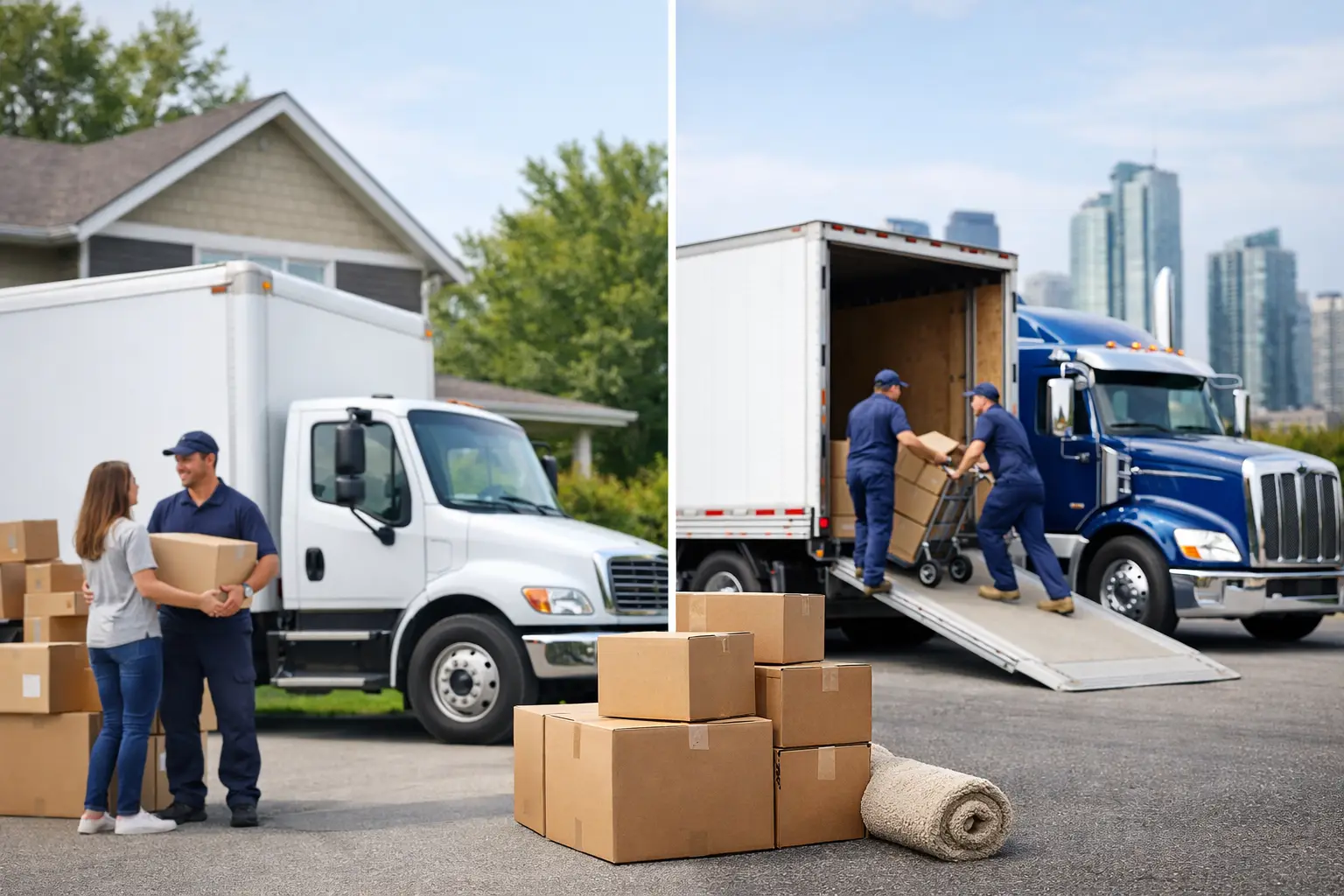
A move from a Rogers apartment to a new home in Bentonville does not need the same moving plan as a household relocation across several states. When comparing local versus national movers, the better choice comes down to the distance, the level of support you need, and who you want handling the details that matter most.
Big moving brands may be familiar, but familiarity alone does not make a company the right fit. A local moving team can offer direct communication, regional knowledge, and a more personal level of accountability. National providers can make sense for certain complex, long-distance moves. The key is understanding what you are paying for before moving day arrives.
Local Versus National Movers: The Real Difference
The most visible difference is size. National moving companies operate across many states, often through large networks, franchise locations, partner agents, or centralized scheduling systems. That scale can be useful when a move involves a long distance, specialized logistics, or a destination far outside a regional mover’s service area.
Local movers are rooted in the communities they serve. They know the roads, neighborhoods, apartment layouts, traffic patterns, and common moving challenges in their area. For Northwest Arkansas households, that can mean a crew that understands the drive between Fayetteville and Bella Vista, the growth around Springdale, and the practical realities of moving into a home in Pea Ridge, Lowell, Siloam Springs, or Rogers.
Size also changes the customer experience. With a national company, the person who provides your estimate may not be the person coordinating your move, and the crew loading your belongings may not be the crew delivering them. A local company often has a shorter line between the customer, the office, and the moving crew. When questions come up, that direct access matters.
When a Local Mover Is Often the Better Fit
For moves within Northwest Arkansas or to nearby communities, local movers are often the practical choice. They can provide in-person awareness of the service area and clearer communication about timing, access issues, stairs, parking, and the services your household actually needs.
That regional experience is especially valuable for apartment moves, home purchases, downsizing, and family relocations. A local crew is more likely to recognize that a loading plan needs to account for a narrow apartment entrance, a steep driveway, or a busy weekend in a growing neighborhood. Those are not small details when furniture, boxes, and a moving truck are involved.
Local ownership can also create a stronger sense of responsibility. Your movers live and work in the same communities they serve. Their reputation is built one neighbor at a time, not just through a distant call center or a national advertising budget. For customers who want to work with a Christian family-owned business, that local connection can be a meaningful part of the decision.
A local mover may also be a strong option for longer-distance relocations when the company has the licensing, insurance, equipment, and operational ability to handle the route. Do not assume “local” means a company can only move you across town. Ask specifically about long-distance service, delivery planning, and how your belongings will be handled from pickup to arrival.
Where National Movers Can Make Sense
National movers are not automatically the wrong choice. They can be a reasonable option when a household is relocating across the country, needs storage at multiple points, has corporate relocation requirements, or wants a company with a broad interstate network.
A large provider may have more standardized systems for coordinating a move between distant locations. That can help when your pickup and delivery are separated by thousands of miles or when the move requires services in regions a local company does not cover.
Still, a larger network can come with more handoffs. Your belongings may move through a warehouse, transfer between trucks, or be handled by teams you have not met. That does not mean the move will go poorly, but it does mean you should ask detailed questions about who is responsible at each stage, whether your shipment will be consolidated with others, and what delivery window to expect.
A national brand can also feel less flexible when your plans change. A closing date moves. A lease is delayed. A new job start date shifts. Before booking, find out who you will call if something changes and whether you will reach a local coordinator who knows your move.
Compare Estimates Beyond the Bottom Line
The lowest quote is not always the lowest final cost. Whether you choose local or national movers, ask for a clear estimate that explains how charges are calculated. Local moves are commonly priced by time, crew size, and service needs. Long-distance moves may be priced by shipment weight, distance, volume, or a combination of factors.
Make sure you understand whether the estimate includes packing, loading, unloading, travel time, mileage, stairs, long carries, bulky items, disassembly and reassembly, and protective materials. If you need packing services or have large pieces such as a piano, safe, oversized sectional, or fragile antiques, say so before the estimate is prepared.
It is also wise to ask about valuation coverage and insurance. Professional movers should be able to explain what protection is included, what additional options may be available, and what the claims process looks like if damage occurs. Clear answers before the move are far better than surprises after it.
Be cautious with estimates that seem unusually low but lack detail. A vague quote can leave room for charges that were never clearly discussed. A reliable mover should be willing to walk through the scope of work and explain what could affect the final price.
Questions That Reveal the Right Moving Company
Before you book, have a real conversation with the company. Ask whether the movers are licensed and insured, who will be on the crew, and whether the same team will handle pickup and delivery. Ask how they protect furniture, floors, doorways, and fragile belongings.
For a long-distance move, ask whether your items will be transferred between trucks or stored before delivery. Ask for a realistic delivery range, not just the answer you hope to hear. If your move includes a date-sensitive closing, job start, or lease deadline, share that upfront.
Pay attention to how the company communicates. Are they responsive? Do they explain the estimate without pressure? Can they tell you what to expect on moving day? Professional moving support should make the process feel more organized, not more confusing.
The Best Choice Depends on Your Move
For many Northwest Arkansas households, a local mover provides the combination of personal service, route knowledge, direct access, and professional support that makes moving day easier. This is particularly true for local residential moves in Bentonville, Bella Vista, Rogers, Lowell, Pea Ridge, Springdale, Fayetteville, and Siloam Springs.
For a major interstate relocation with complicated logistics, a national provider may be worth comparing. But compare the actual service plan, not only the logo on the truck. The right mover is the one that can clearly explain how your belongings will be protected, how your schedule will be handled, and who will answer when you need help.
Major Movers LLC is built to serve Northwest Arkansas neighbors with licensed, insured, full-service moving support and direct local care. Request a free estimate, ask the questions that matter to your household, and choose the team that gives you confidence before the first box is loaded. Lets get moving!